Showing posts with label OTHERS ARTICLES. Show all posts

Tuesday, 17 January 2023

EDITORIAL 80: EMÁSF REVISTA DIGITAL DE EDUCACIÓN FÍSICA

It was an honour to be invited to write the editorial for the number 80 of the "EmásF" Revista Digital de Educación Física. The topic of this editorial is my personal experience coaching the Libya Futsal National Team in the last CAF African Futsal Cup of Nation celebrated in Layounne (Western Sahara) in 2020. It is written in Spanish and its title is: "Copa de África de futsal-Marruecos 2020: Reflexiones y Enseñanzas". Check the links below to download either the editorial alone or the full journal.


DOWNLOAD THE EDITORIAL HERE!


DOWNLOAD THE FULL NUMBER 80 HERE!


If you prefer to check the digital version of the journal in an online reading app, please follow the next link or click here to go directly. 

Sunday, 1 November 2020

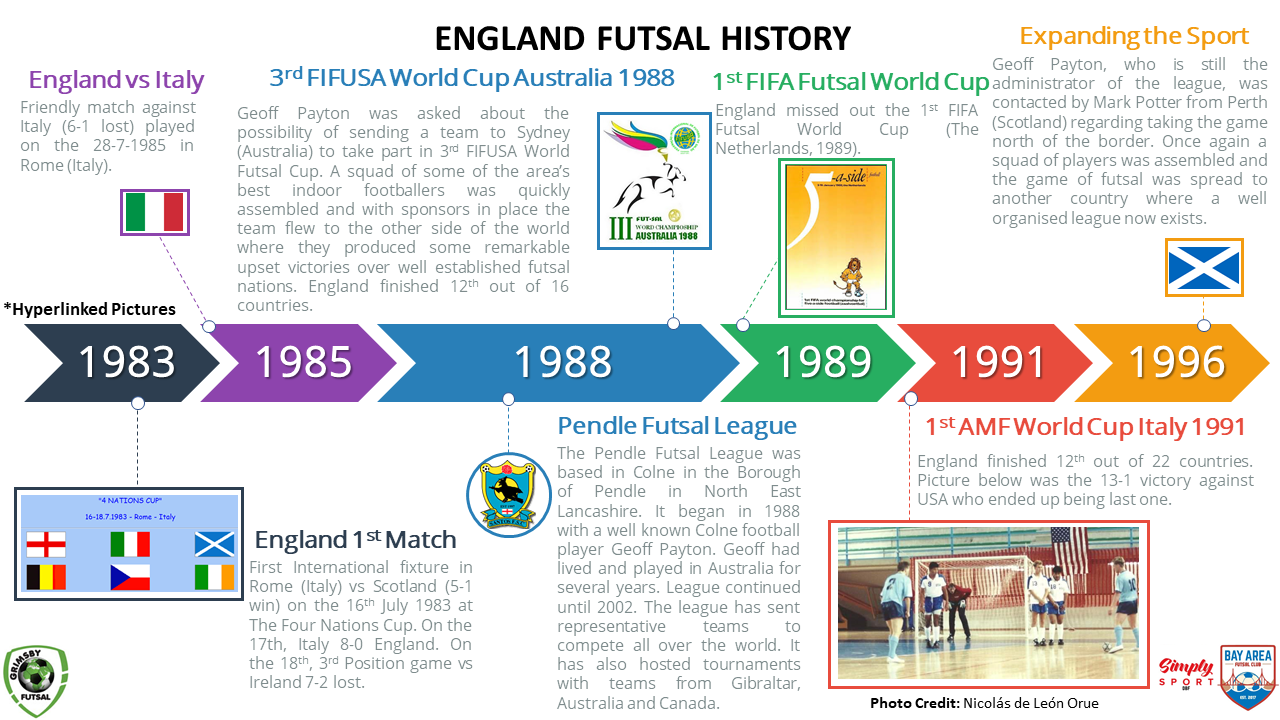
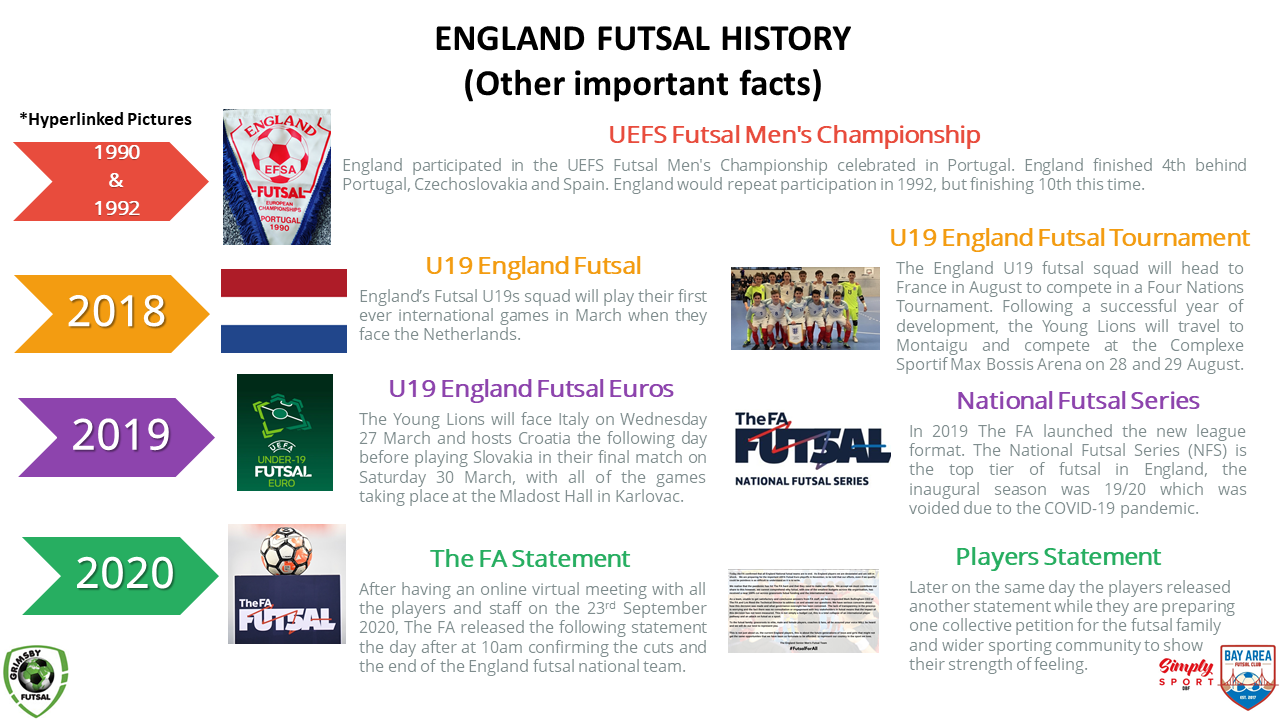
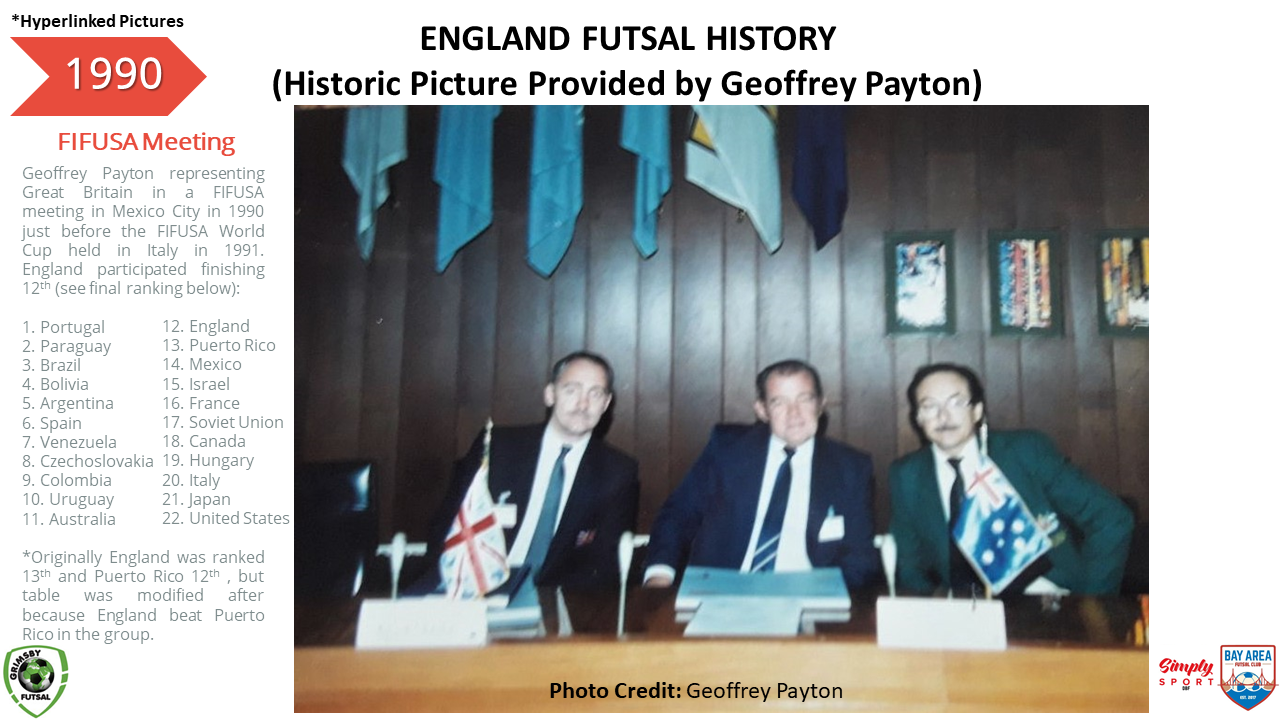
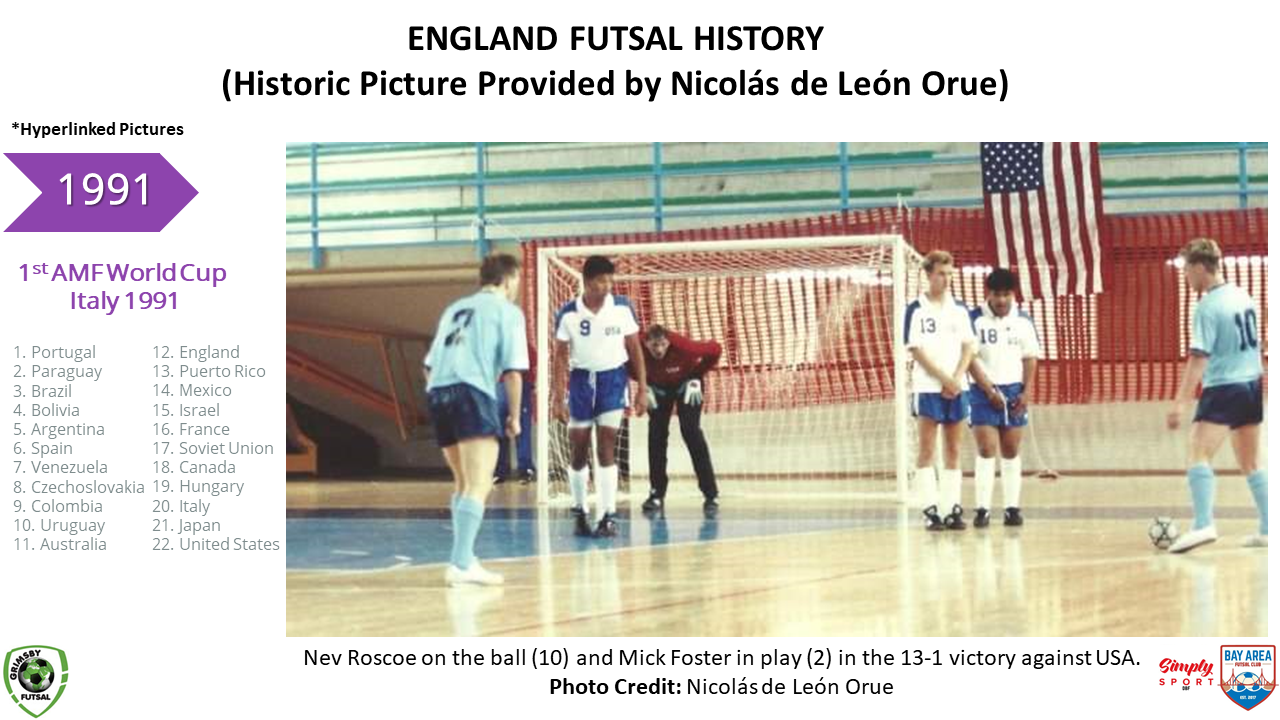
ENGLAND FUTSAL HISTORY

NOTE 1: Before even starting this post, I would like to acknowledge my co-author, English futsal pioneer and friend, Mr Kevin Bryant for all the help to put this document together. Also, I would like to give a million of thanks to Mr Mark Potter, another futsal friend and Scottish futsal pioneer for providing valuable information, pictures, chats with me and most importantly for connecting me with Mr Geoffrey Payton. Geoff is the another English futsal pioneer! Mr Geoffrey Payton (according to all the information collected) is the person who started futsal in Colne (Lancanshire) in 1988. A fantastic history behind that needs to be unveiled. Muchas gracias Geoff!!

INTRODUCTION

"Futsal" started on the 8th of September of 1930 when Juan Carlos Ceriani, a teacher in Montevideo (Uruguay) created a version of indoor football for recreation in YMCAs. This new sport was originally developed for playing on basketball courts, and a rule book was published in September 1933. Ceriani's goal was to create a team game that could be played indoor or outdoor but that was similar to football. Ceriani, writing the rule book, took as examples the principles of football (the possibility to touch the ball with every part of the body except for the hands), and he took rules from other sports too: from basketball the number of team players (five) and the game duration (40 actual minutes); from waterpolo the rules about the goalkeeper; from handball for the field and goal sizes. Futsal, fútbol sala and futebol de salão will be covered on this project. 

Most of the images on this timeline has been hyperlinked on the PDF document to the original source of information. Click on them to learn more about those events.


OBJECTIVES

The objective of this research has been three-fold: a) to recognise and acknowledge the people that got involved and helped in this process; b) to document the history and the steps of development that futsal took in England and c) to know the history, to understand the present and improve the future (very similar to Carl Sagan’s quote). 

Of course, when this type of studies are carried out, there is the risk to miss out information or key point. We apologise in advance if that has happened. It was not our intention. We would like to encourage anyone that has more information to help us to fill in some of the gaps or to send us documents that prove some key point of the futsal history in England.

DOWNLOAD WHOLE PDF DOCUMENT AT THE BOTTOM OF THIS POST


CONCLUSIONS

One more time, and as I mentioned before when this type of studies are carried out, there is a huge risk to miss out information or key point. We truly apologise in advance if that has happened. It was not our intention. Therefore, if you have any piece of information that you think it should be included, we would like to encourage anyone to help us to fill in some of the gaps or to send us documents that prove some key point of the futsal history in England.

These last two months doing this personal project have been amazing . I only hope that you, readers, enjoy reading this document as much as I enjoyed researching, talking to Kevin, Mark, specially Geoff and others from all around the world. It has been an unforgettable experience.  

ACKNOWLEDGEMENTS 

Again, thanks Kevin, Mark and specially Geoffrey. I really think that English futsal has been very unfair with you and here are "my two cents" to the cause. 


NOTE 2: One more note, remember that once you have downloaded the PDF document, the 90% of the pictures are hyperlinked to the original source of information. Follow the links for more deep information about it. Enjoy!

Friday, 2 December 2016

U8-U9 FUTSAL SESSION

I would like to thank "La Web del Mister" for publishing one of our futsal sessions delivered to our U8-U9 futsal players. The session was performed on the 30th November with the World United Futsal Academy team that will participate in Rocklin (California) in the US Youth Futsal Northern California Regional Championships and will travel to Barcelona (Spain) at the end of December. In Barcelona, we will have a futsal training camp at FC Barcelona Futsal and will participate in the World Futsal Cup 2016.

The session has been published in Spanish and English and you have full access in both languages following the next link:

Tuesday, 21 October 2014

ACUPUNCTURE & DRY NEEDLING IN SPORT AND COMMON DISORDERS REVIEW

I am very glad to announce that my friend Alex Huntly has published his first ever paper in an International Journal. The article is a fantastic review about the use of acupuncture and dry needling in sport and common conditions. The paper has been published in the American Journal of Sports Science and Medicine.

Abstract
There is an evidence base of varying strength for the use of acupuncture in conditions, such as chronic low back pain, myofascial trigger point, osteoarthritis, pain relief, performance enhancement and respiratory disorders. The aim of this study was to review the evidence base of acupuncture for common conditions that occur in sport. A literature review of how acupuncture works and what it can treat was performed. Evidence for each condition was critically appraised. There are significant differences in the perceived effectiveness of acupuncture for different conditions and mechanisms. Chronic low back pain, myofascial trigger point, acute low back pain and osteoarthritis were perceived to be effective. All of the reviewed mechanisms of acupuncture were perceived more effective than Chinese meridian. Those conditions that were rated as less effective generally had less supporting evidence or were not relevant to sporting populations.

Keywords: trigger point, low back pain, traditional chinese medicine.

The whole reference of the article is as follows:


To download the paper in pdf format click here. 

Congratulations Alex!

Thursday, 11 July 2013

COMBINED ELECTROSTIMULATION & PLYOMETRIC TRAINING

The “Journal of Sports Medicine and Physical Fitness” has recently published one of our papers. The full reference and its abstract are below:

Aim: The aim of this paper was to analyze the effects of training combining plyometrics (PT) and neuromuscular electrostimulation (ES) on speed training and triple jump. The study consisted on the application of an electrostimulation protocol and plyometric jumps to four groups of young athletes (Control, G II, G III and G IV).
Methods: Eighty-four young athletes took part in the study (40 girls and 44 boys). All of them were sprinters (100 and 200 meters dash, and 100 and 110 hurdles meters), their mean age, weight and height being 15.9±1.4 years old, 58.53±8.05 kg, and 1.68±0.07 m, respectively. After 8 weeks of training, a 30-meter sprint launched test –time being measured by photoelectric cells – and a triple jump test from static position were completed. Repeated measures ANCOVA were used.
Results: The only group that improved significantly in the speed test (P<0.001) relative to the control group was G IV. In the triple jump test, improvements were significant, (P<0.05) and (P<0.01), in G II and G IV, respectively, relative to the control group. The results of ES + PT combined training offered no significant differences in either speed test and triple jump by gender.
Conclusion: The most effective training aimed at improving the speed of 30 m is simultaneous combined training. Regarding triple jump, the results showed significant improvements in the performance of athletes who used both simultaneous combined training and used ES followed by plyometrics. However, no significant improvement was observed after PT training prior to ES.

Saturday, 31 December 2011

COMBINED ELECTROSTIMULATION & PLYOMETRIC TRAINING

This new post is just to let you know that a new paper has been published in the Journal of Human Sport & Exercise, with ISSN 1988-5202. Its whole reference is as follows: 

 Since I thought it may be of interest to some of you, here you can see the abstract:

The aim of this study was to determine the performance evolution of a group of athletes after 8 weeks of training that combined electrostimulation (NM ES) and plyometrics (PT). 78 medium level sprinter athletes participated, 40 women and 38 men (age, 15.9±1.4 years old, body mass index, 20.5±1.68 kg/m2; weight 58.53±8.05 kg; height, 1.68±0.07 m). The sample was randomized into four groups [Control (PT only), NM ES + PT, PT + NM ES, and Simultaneous (plyometric jumps were performed through the passage of current). Improvements were obtained in the Abalakov jump of 3.57% (p<0.01), 13.51% (p<0.001), 1.23% (p<0.01), and 0.77%, and in the sprint of 0.45%, 3.87% (p<0.05), 4.56% (p<0.01) and 7.26% p<0.001 for the control group, NM ES + PT group, PT + NM ES group, and Simultaneous group, respectively. It was concluded that a) improvement in vertical jump requires the application of the NM ES prior to PT; b) the sprinter athlete must combine the workout simultaneously or apply the ES after the PT training; and c) in sportspeople that require improvement in both the vertical jump and speed tests (e.g. basketball) the simultaneous method is not recommended, the order of application of NM ES and PT being non-determinant. Finally, the time needed to obtain significant improvement in strength training through a combination of NM ES and PT is substantially lower (15 days) than the time needed to improve speed (30 days).